
Home / Wood fence
Wood fence installation.
Pressure-treated southern yellow pine or western red cedar, built on posts set in concrete — not driven, not tamped in dirt.
Our work
Wood fences we’ve built.
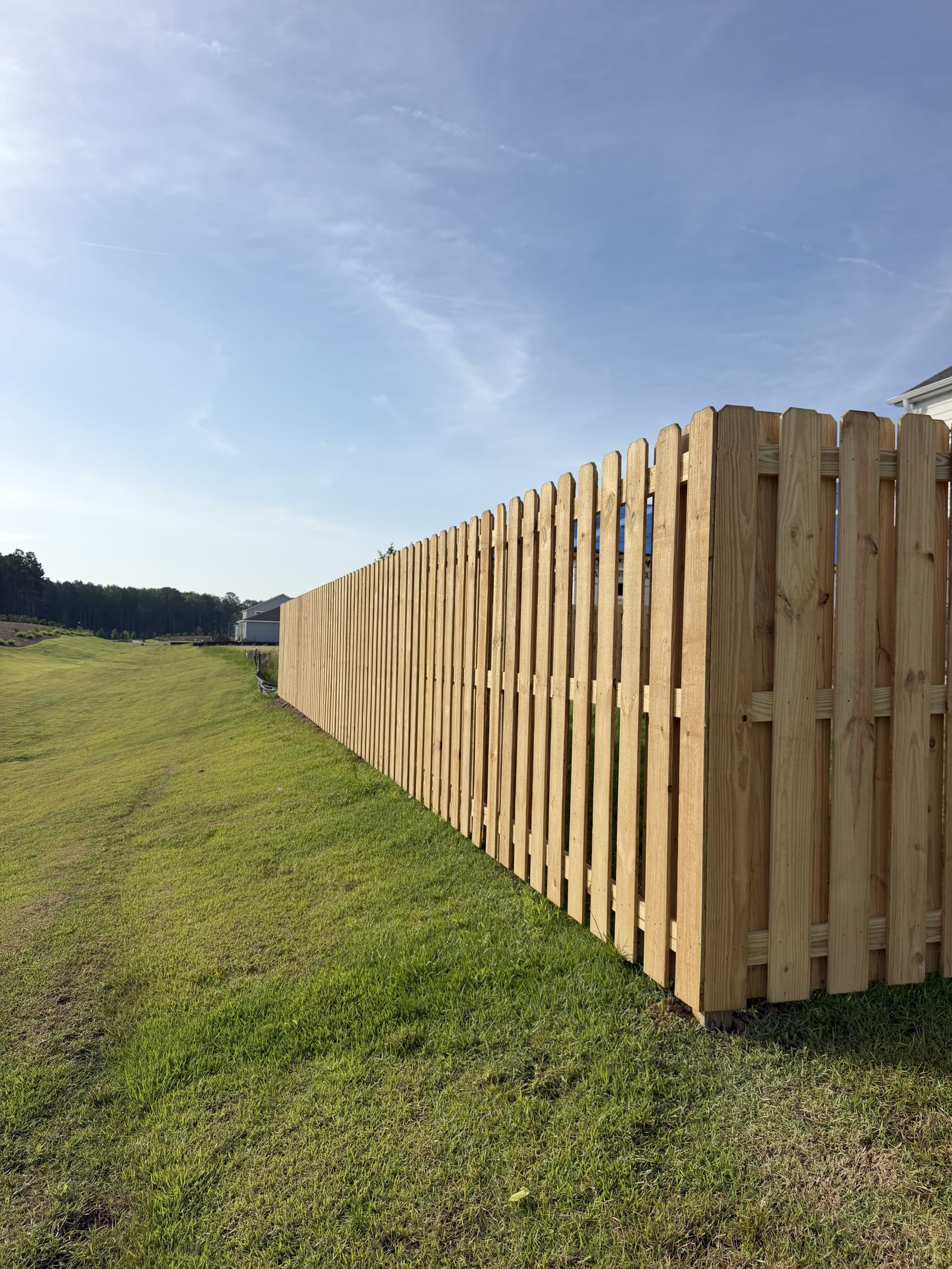
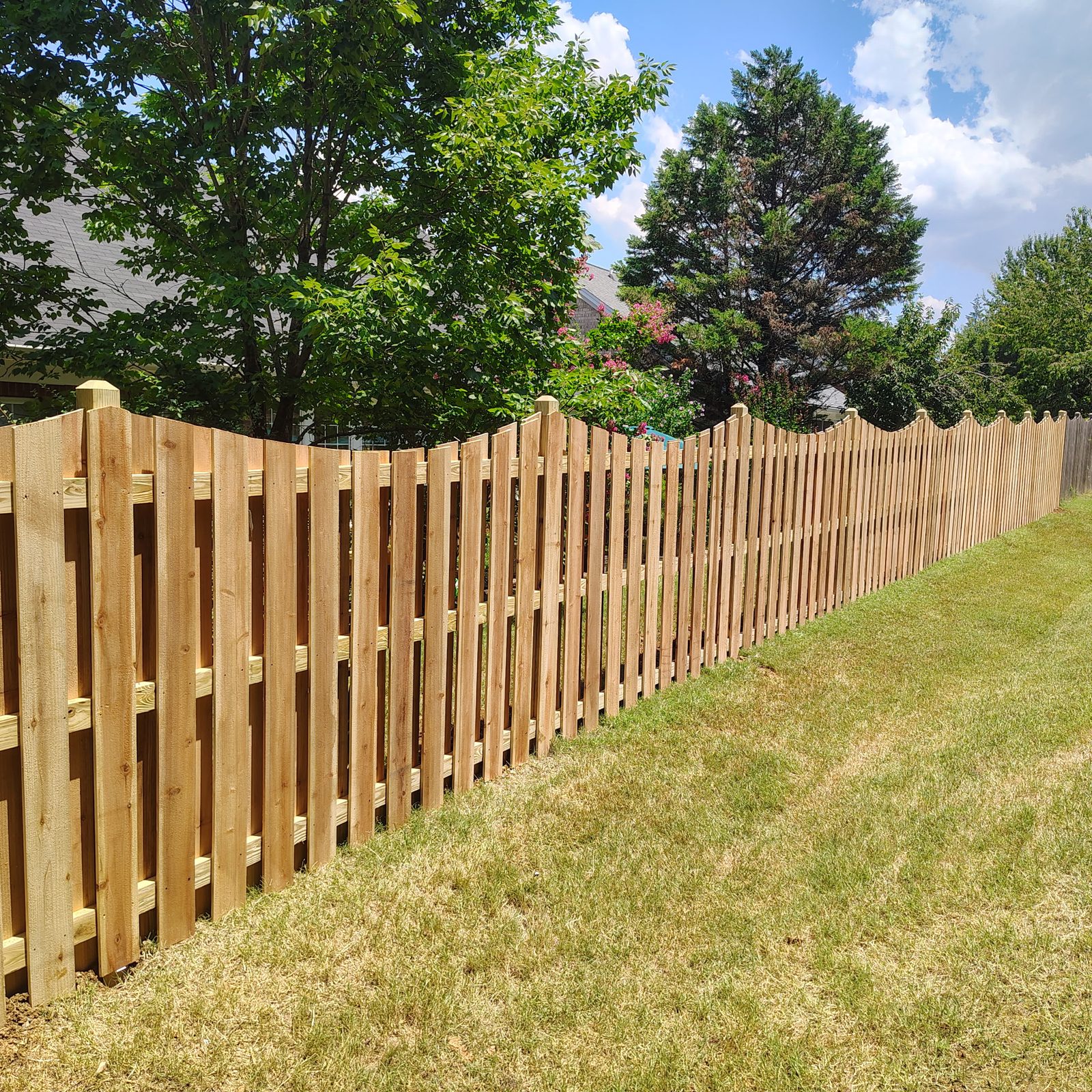
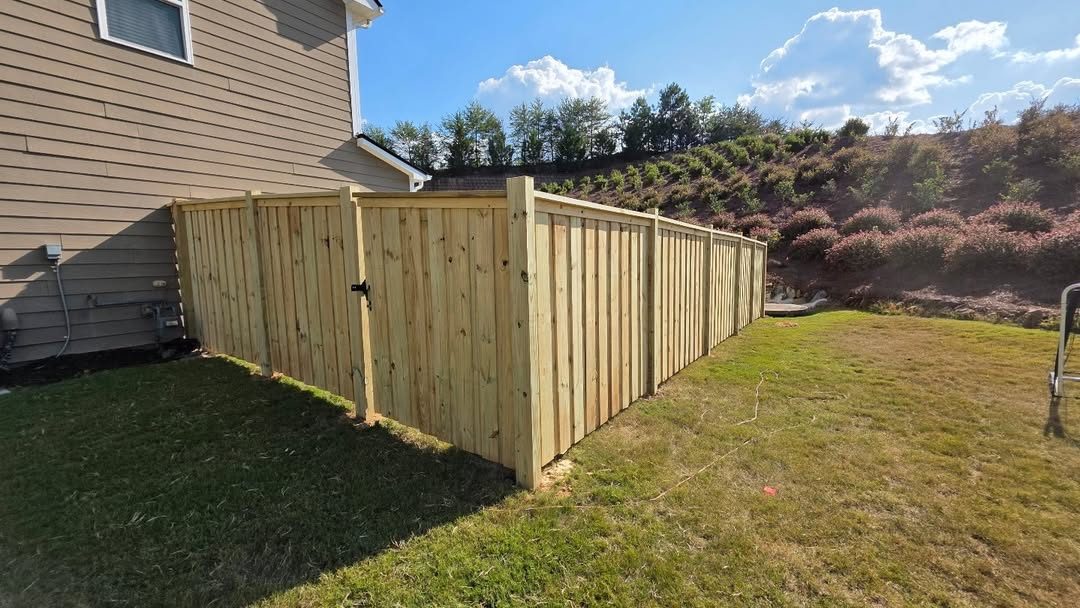
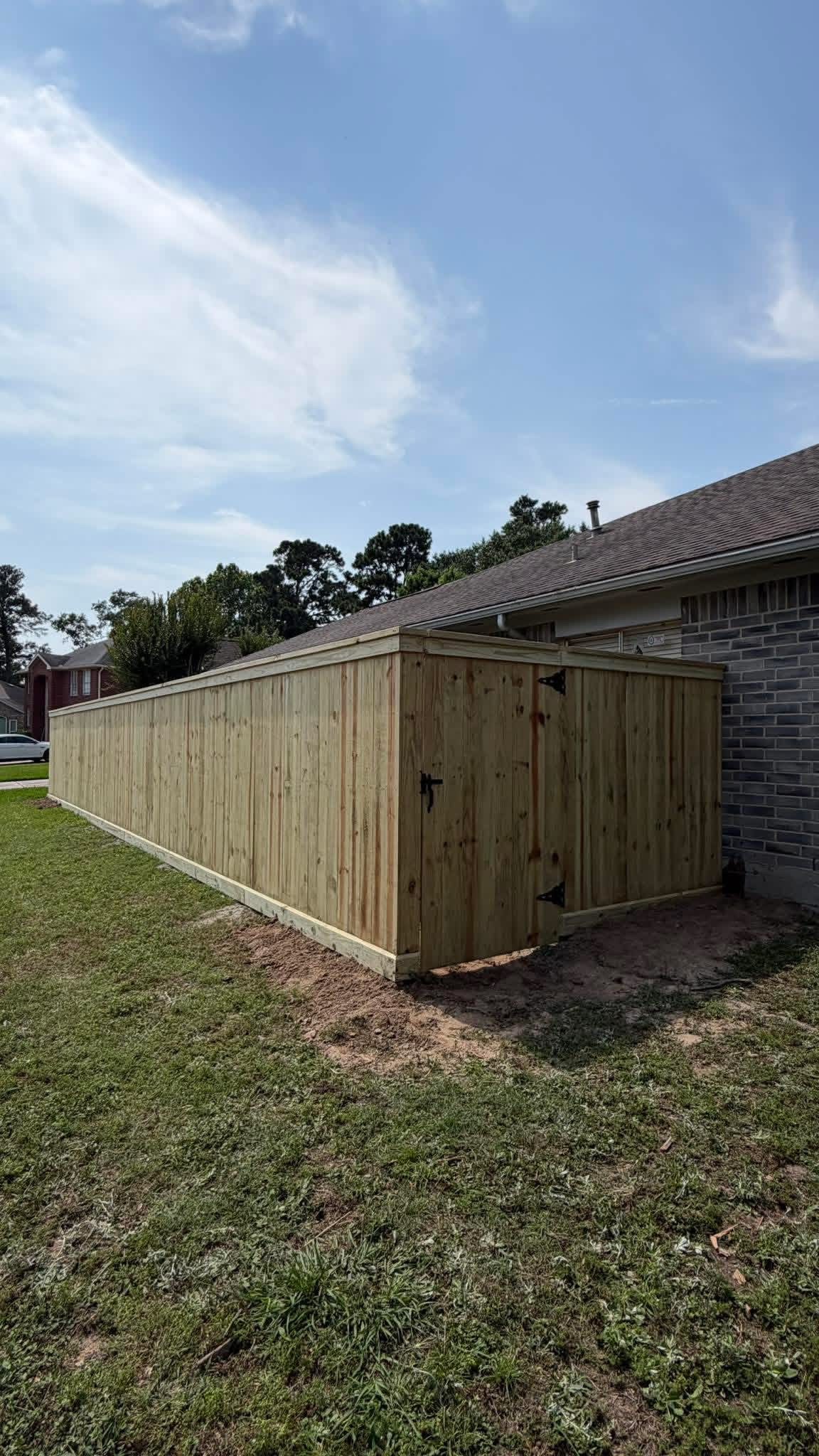
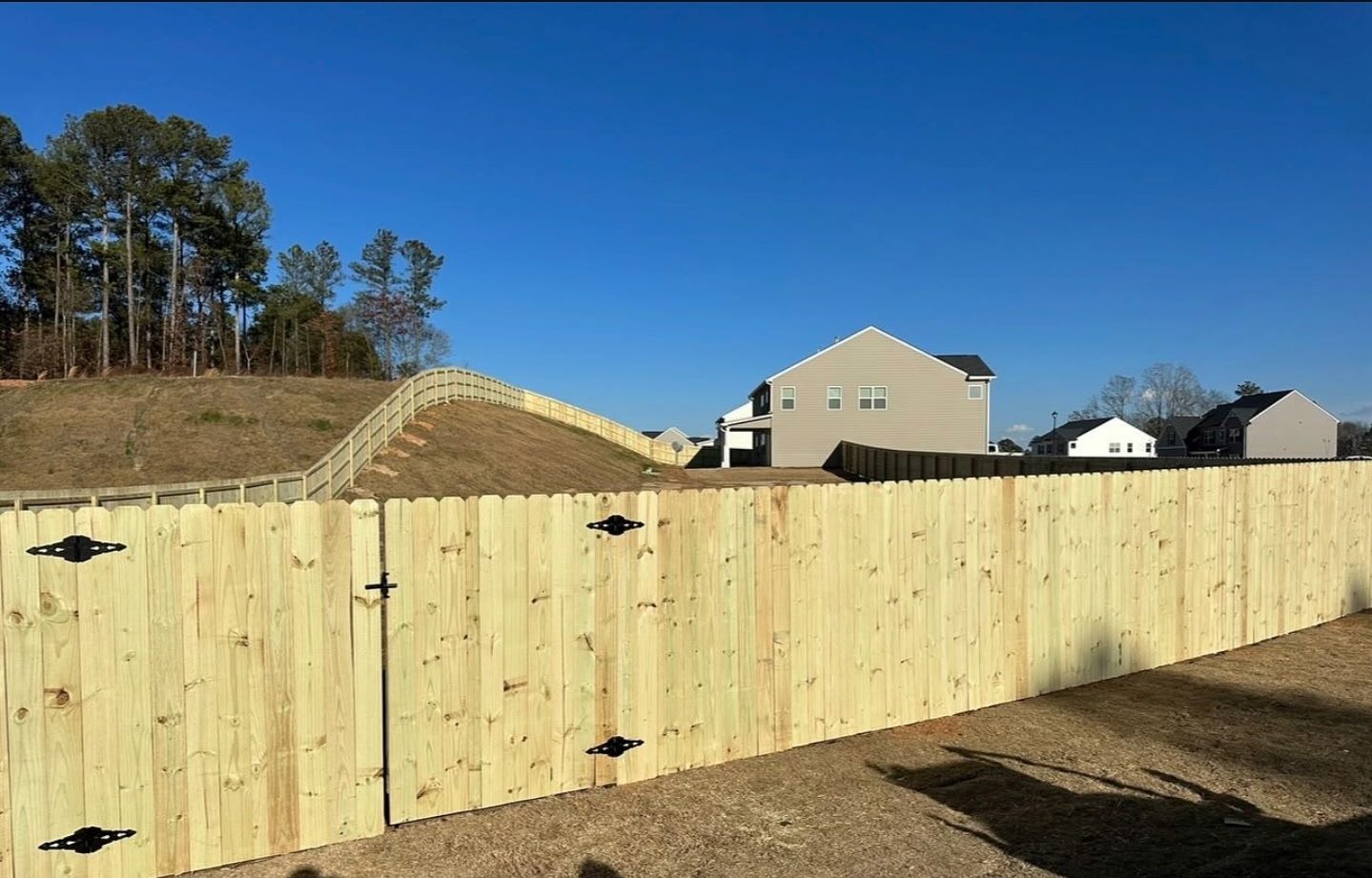
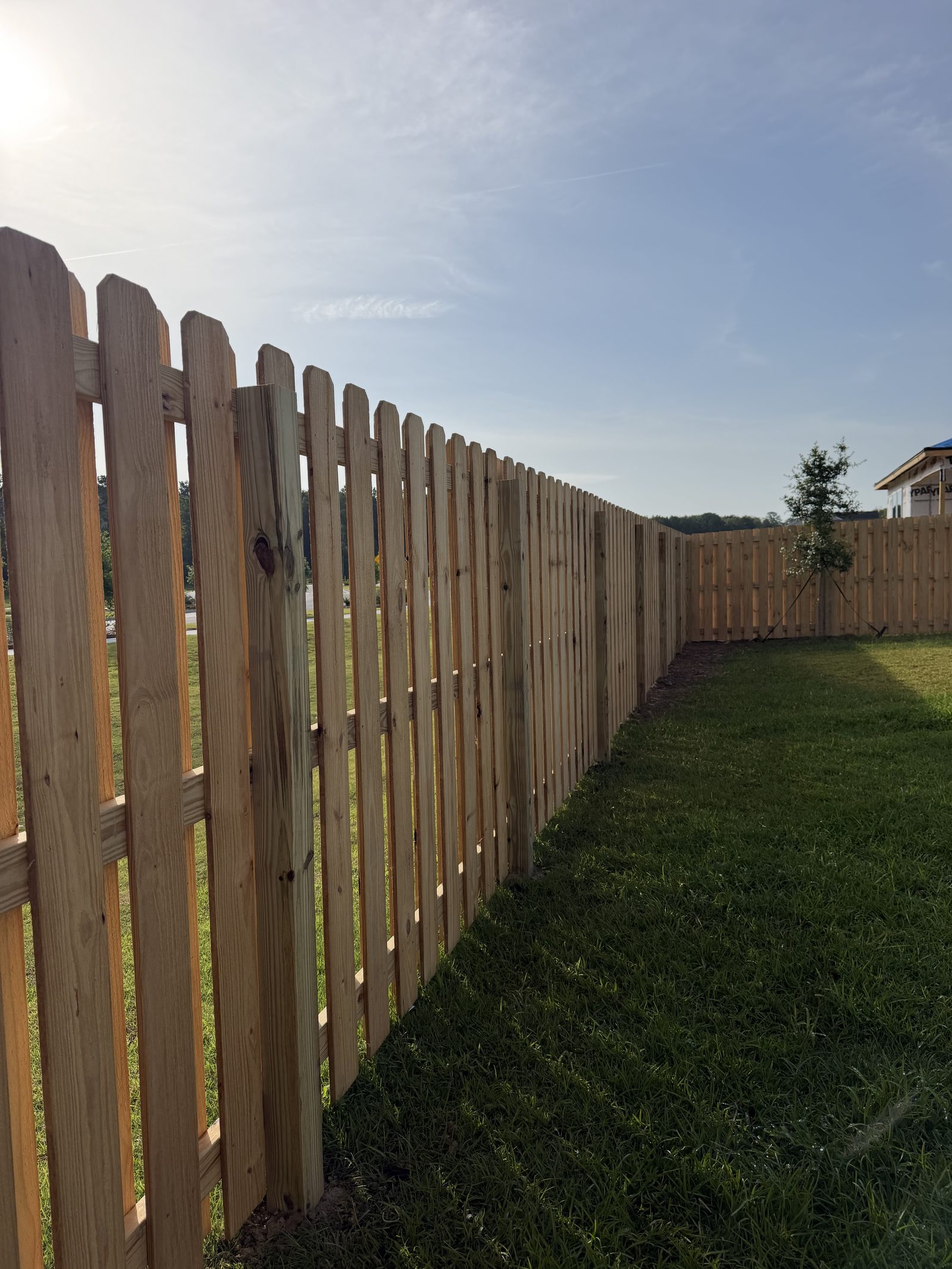
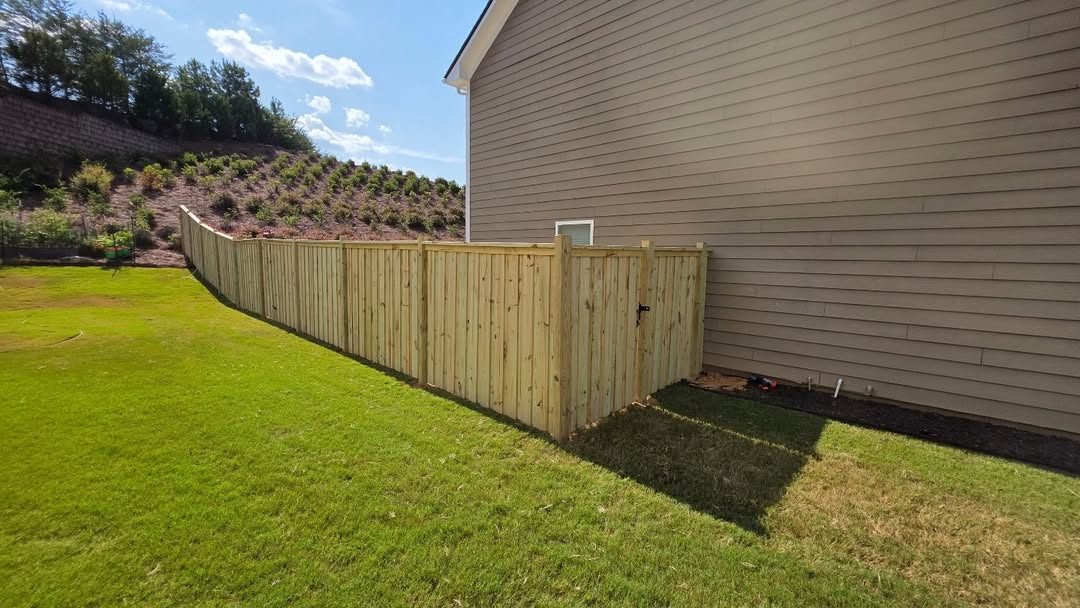
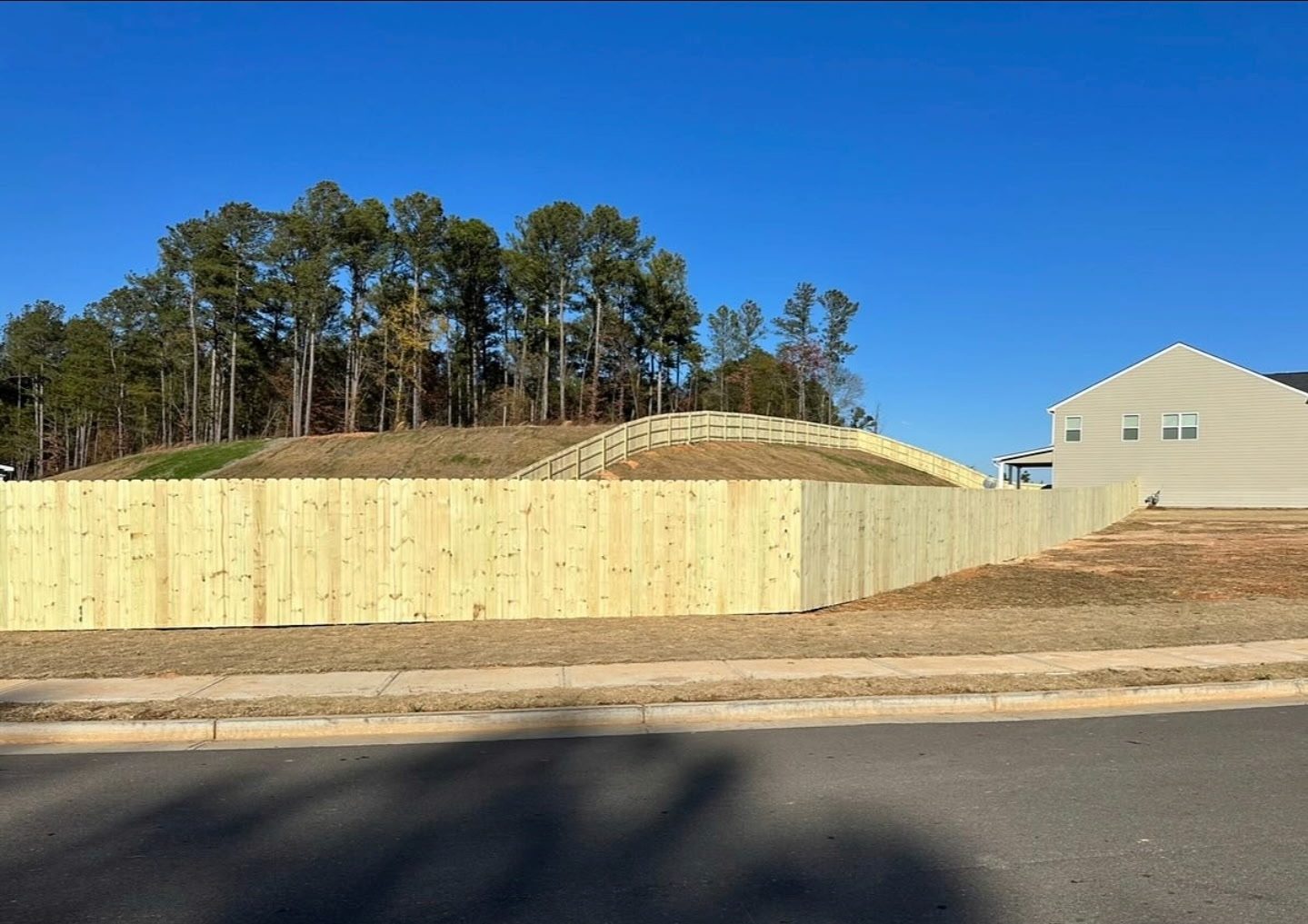
Wood is still the most common privacy fence we install, and it is also the one most often built badly. The difference between a fence that lasts fifteen years and one that leans in three is almost entirely posts, rail count, and fasteners. Those are the things we spell out on the quote.
Styles we build
Pick the one that fits the lot.
Dog-ear privacy
The standard six-foot board fence. Pickets butted tight, corners rounded.
Board-on-board
Overlapping pickets so the fence stays solid when the wood shrinks. Costs more, looks better longer.
Shadowbox
Alternating pickets, finished on both sides. The neighbor-friendly option, and it lets wind through.
Horizontal
Wider boards run flat between posts. Modern look, needs straight lumber and closer post spacing.
Picket and ranch rail
Three to four foot front-yard fence, spaced pickets or open rail.

What the price includes
No line items invented later.
- Posts set in concrete, 2 bags per gate post
- Three 2x4 rails on 6' heights, two on 4'
- Hot-dip galvanized or ceramic-coated ring-shank fasteners
- Steel-framed or diagonally braced gates, not just picket-on-rail
- Old fence tear-out and haul-off quoted as a line item, never assumed
Typical specs
- Common heights4', 6', 8'
- Post spacing6' to 8' on center
- Post depth24" to 30" typical
- SpeciesPT southern yellow pine / western red cedar
- Rails2x4, 3 rails at 6'
- Gate hardwareSelf-closing hinges available; heavy-duty on double gates
Staining & sealing
Protect the fence, keep the color.
New wood looks great on day one and then the weather goes to work on it. Staining and sealing is the single best thing you can do to keep a wood fence looking new and standing straight for years longer.
- Locks in the color you want — a natural clear coat, cedar, or deep walnut — instead of letting the wood weather to gray.
- Adds years to the fence: sealing repels water, the main driver of rot, warping, and splitting.
- Blocks UV graying — untreated pine silvers within a season; stain holds the tone.
- Less upkeep down the road: a sealed fence sheds water and resists mildew.
- Reads as finished and cared-for — a real curb-appeal and resale bump.
How we handle it
We offer staining as an add-on line item on a new fence, or as a standalone service on a fence you already have.
One timing note: fresh pressure-treated pine is wet and needs to dry out before it will take stain — usually a few months. We’ll tell you when yours is ready and can come back to seal it then, so you get the protection without trapping moisture in the wood.
Straight talk
Worth knowing before you buy
New pressure-treated pine is wet. It will shrink, and small gaps opening up in the first season is normal, not a defect. Board-on-board is the fix if gaps bother you.
Wait three to six months before staining PT pine so it can dry out. Cedar can be sealed sooner.
Double gates over ten feet wide need a drop rod and a beefier hinge post. In sandy soil that post needs extra depth and concrete, or the gate will start dragging.
Common questions
Wood fence questions we get.
How long does a wood fence last here?
Pressure-treated pine with posts in concrete typically runs 12 to 18 years in the Southeast, with the posts usually failing first. Cedar tends to look better longer but costs more up front.
Which side gets the good side?
Convention is that the finished side faces out toward the neighbor and the street. Shadowbox sidesteps the argument entirely by looking the same from both sides.
Can you build on a slope?
Yes. We either rake the panels to follow the grade or step them down in even increments. We will tell you on site which one suits the lot.
Do you stain or seal?
We can quote sealing as a separate line. On new pressure-treated pine we recommend waiting a few months first.
Want this priced on your property?
We measure on site and send the number in writing, itemized.